New York City Public Schools
The Context
For students in New York City, opportunities to learn critical health education skills vary considerably from school to school. In 2018-19, more than half of NYC students in grades 6-8 finished middle school without having a comprehensive health education class, and some students did not receive any health instruction at all. To address these and other challenges, in 2018, New York City Public Schools (NYCPS) received funding to begin a multi-year initiative called Health Ed Works. This initiative focused on providing more students with quality comprehensive health education that meets New York State Education Department requirements and helps them develop the skills to make healthy decisions and avoid high-risk behaviors throughout their lives. As part of this initiative, NYCPS Office of School Wellness Programs (OSWP) began work to provide a cohort of 250 Focus Schools with support to establish model health programs that can serve as a blueprint for the rest of the City. Health Ed Works was defunded in 2019 as part of citywide budget cuts; as a result, NYCPS did not implement the initiative beyond the first year.
As part of its work to establish model health education programs, NYC Public Schools engaged Sharp Insight from 2021-2023 to conduct a mixed-methods evaluation to explore the research question: Which Health Education practices are associated with significant impacts on middle school and high school student health risk behaviors?
Our Approach
Sharp Insight worked closely with staff from NYC Public Schools’ Office of School Wellness Programs (OSWP) to utilize a rigorous approach to developing meaningful results, centering equity in the process. Grounded in Sharp Insight’s approach to evaluation and aligned with our core values, our work centered around:
Balancing OSWP’s expertise in health education and school programs with Sharp Insight’s evaluation expertise: We used our collective experience across settings and skill areas to collaboratively develop a detailed research plan. This included the intentional selection of variables and statistical modeling for the quantitative components, as well as recruitment and analysis planning for focus groups with students, and interviews with health teachers and school administrators.
Keeping equity at the forefront: We ensured that our research plan incorporated voices from students, teachers, and administrators from schools across the district. Additionally, one component of the quantitative analysis was examining whether certain health education practices were effective for some socio-demographic subgroup of students but not others.
Bridging research and practice: Team members from OSWP and Sharp Insight worked together to synthesize key findings; develop recommendations for policymakers, school administrators, and caregivers; and craft public-facing materials for various audiences to learn about the work. You can explore each of these materials in The Results section below.
The Result
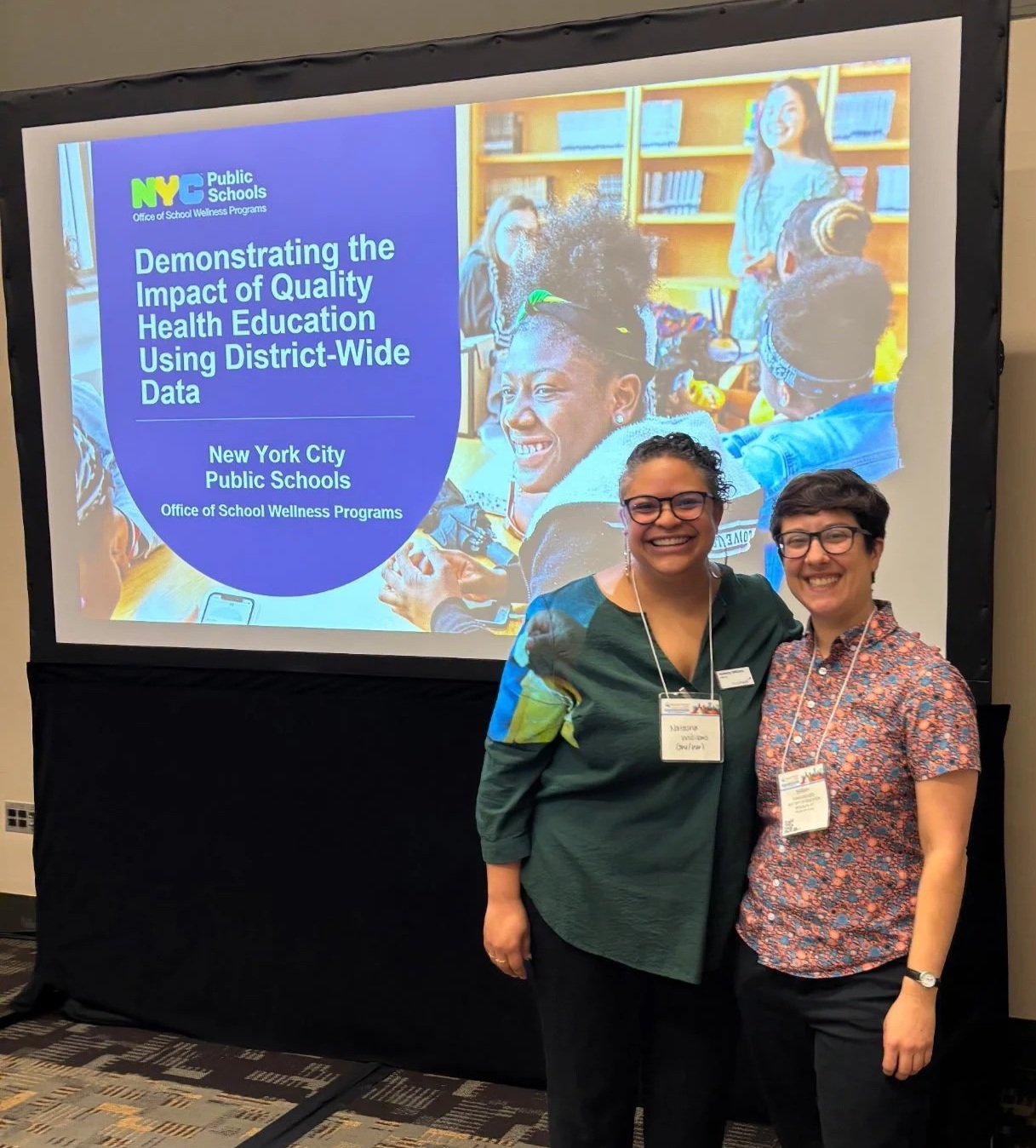
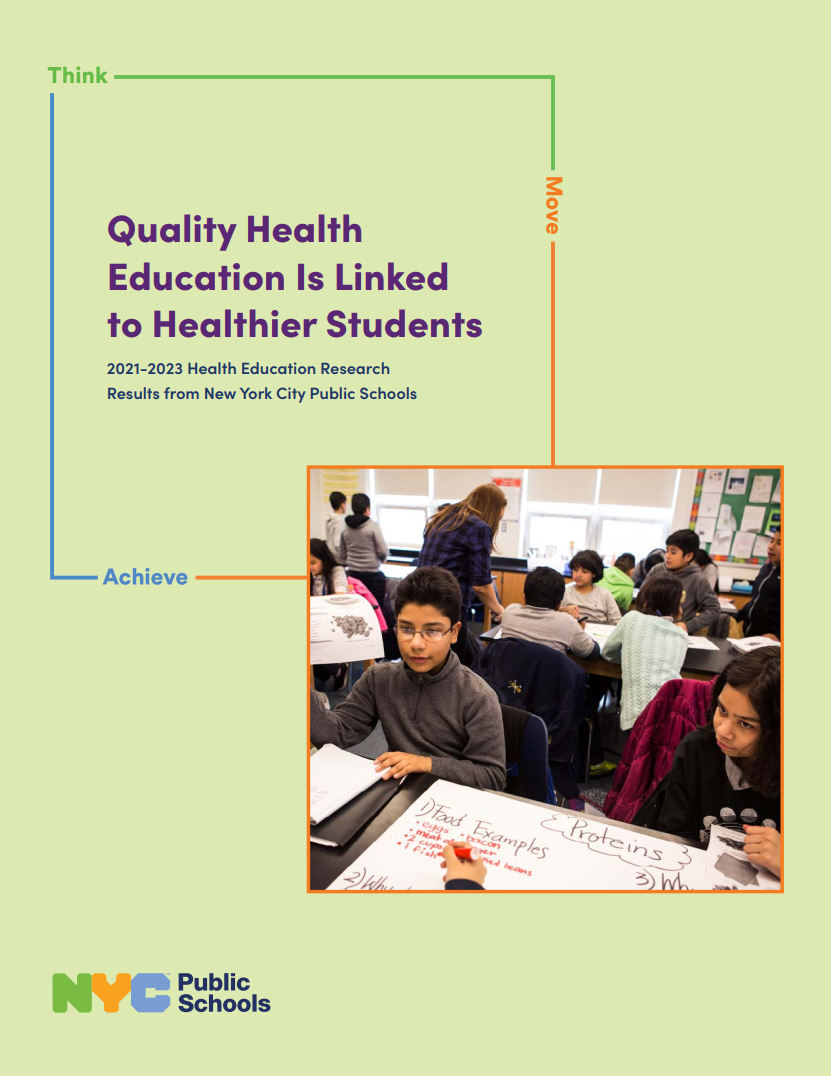
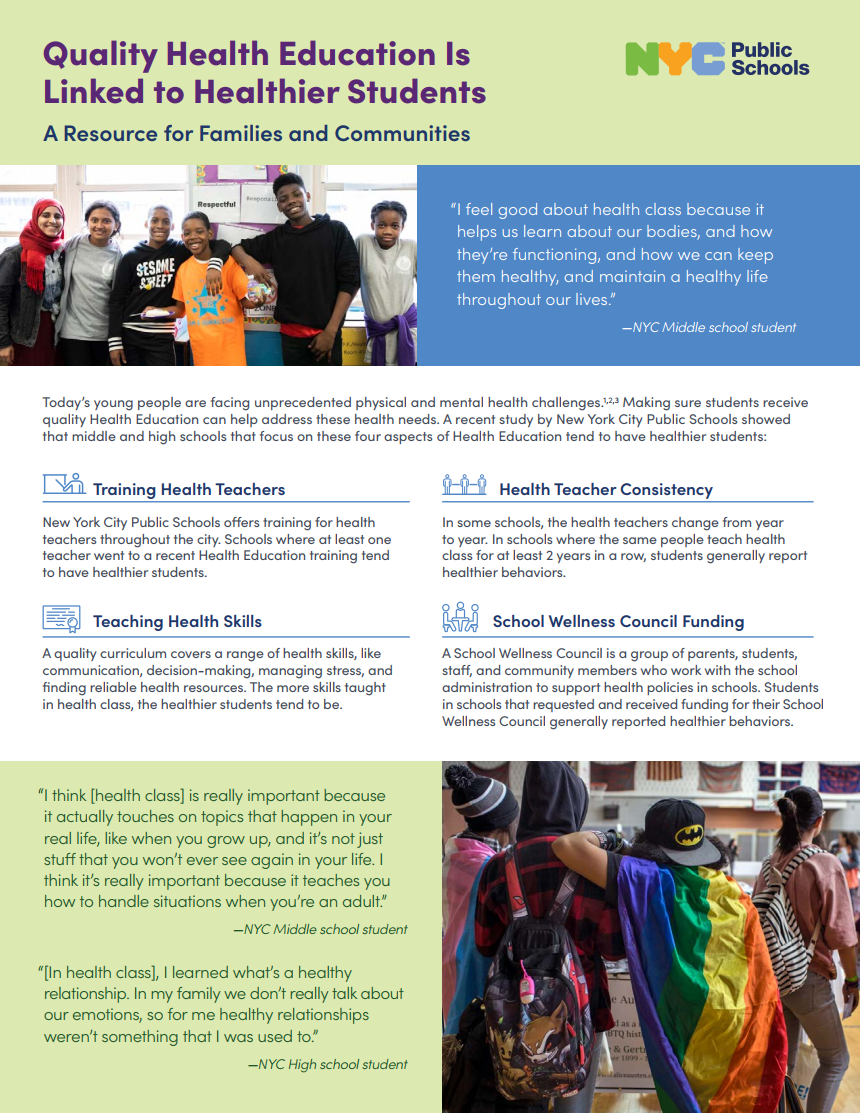
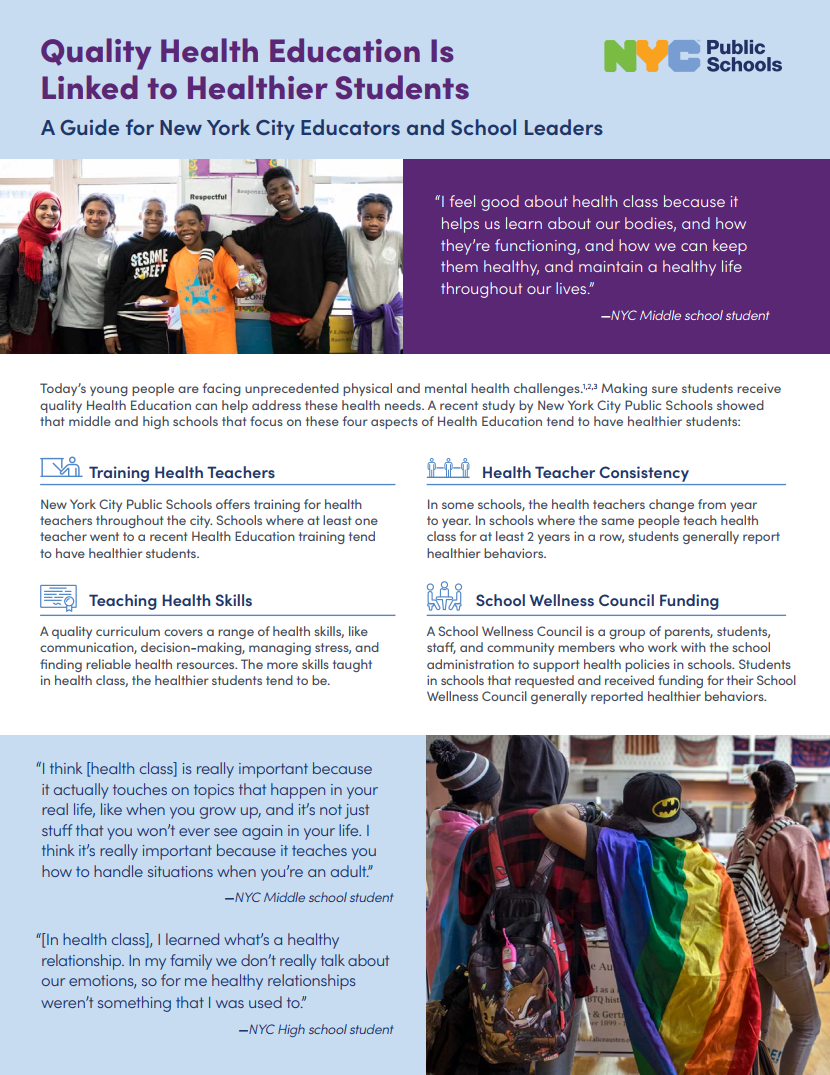
In 2024, NYC Public Schools publicly shared findings from this work. In short, findings from this research show that schools that focus on these four aspects of health education tend to have healthier students: health teacher training, consistently assigning health teachers, skills-based curricula, and School Wellness Council grant funding. These findings have been presented at national conferences, shared with other New York City agencies (e.g., Department of Health and Mental Hygiene, Sex Ed Task Force, Citywide Wellness Advisory Council), and used in support of City Council testimony. For more information, visit the NYC Public Schools website where the following three deliverables may be accessed:
“Working with the Sharp Insight team over several years allowed us to conduct a rigorous evaluation, thoughtfully interpret the results, and disseminate clear findings to our stakeholders. Sharp Insight was a partner with us every step of the way, providing needed expertise not only in planning and statistical models but also best practices for designing reports and presenting findings.”